An honest, detailed comparison — free vs paid, Vedic vs Western, generic content vs real chart-specific analysis. Includes our own product, disclosed clearly, ranked honestly.
Type "best AI astrology app" into Google and you'll find a strange pattern: nearly every single result is a comparison article published by one of the apps it's comparing — and unsurprisingly, that app always wins. We're not going to pretend we're above that temptation. Astromathi appears on this list, because it belongs on it. But we're disclosing that clearly up front, we're not putting ourselves at #1, and we're naming real weaknesses alongside real strengths — for us and for everyone else here. That's the only version of this article worth reading.
The AI astrology market in 2026: dozens of tools, three genuinely different products wearing similar branding.
The Real Problem With Most "AI Astrology" Reviews
Every roundup in this space has the same structural problem: the sites doing the comparing are usually also selling one of the products being compared. That doesn't necessarily make the information wrong — but it does mean readers should expect self-interest baked into the ranking order, if not the facts themselves. We'd rather be upfront about our own bias than pretend we don't have one.
So here's our approach: every claim about a competitor in this article is grounded in that company's own public pages, app store listings, or independent reviews — not our assumptions about them. Where we're not certain of something, we say so. Where a competitor genuinely does something better than we do, we say that too.
What "AI Astrology" Actually Means — Three Different Products, One Label
Before ranking anything, it's worth naming a confusion baked into this entire category. "AI astrology app" gets used for at least three genuinely different products:
🧮
Chart calculation engines with AI-generated interpretation
Real astronomical data (planetary positions, houses, aspects) computed for your exact birth details, then explained by an AI model. This is the category where "does it know your actual chart" is the make-or-break question.
📱
Sun-sign or template-based content apps
Daily horoscope content selected or generated from your general sign category, sometimes styled to feel personal even when it's drawing from the same limited pool everyone with your sign sees.
👤
Live human astrologer marketplaces
AI handles onboarding, matching, or chat routing, but the actual reading comes from a human consultant, billed by the minute or per session.
Several of the apps below blend more than one of these. Knowing which is which before you pay for anything will save you real disappointment.
Our Testing Criteria
We evaluated every entry on five things, consistently:
1. Real chart computation — does it calculate your actual planetary positions, houses and (where relevant) Nakshatras from your exact birth data, or does it work from your Sun sign alone?
2. Vedic vs. Western — which zodiac system, and does the app say so clearly?
3. Predictive depth — does it answer "when will X happen," or only "here's your personality" and "here's today's transit"?
4. Pricing transparency — free tier, real subscription cost, or opaque per-minute billing?
5. Privacy practice — what happens to your birth data and conversation history?
We spent time in each app's actual free tier before touching any paid feature, since a free tier that's deliberately hollowed out to force upgrades tells you something important about a company's priorities. We also cross-referenced pricing claims against each company's own current app-store listing or pricing page rather than trusting older cached figures, since subscription prices in this category change often. Where a company's own comparison page made a claim about a competitor, we verified it independently rather than repeating it — self-published "we're #1" claims (including, historically, our own kind) are exactly the thing this review is trying to cut through.
A Note on Data Privacy — The Part Most Reviews Skip
Astrology apps ask for something most apps don't need: your exact birth date, time and place, which is precise enough to be a genuinely sensitive piece of personal data. Privacy practice varies more across this category than most people realize, and it's worth checking before you hand over your details.
🔒
Strong, disclosed privacy practice
Steer Astro states no data selling, no third-party ad trackers, and encryption in transit and at rest — among the more privacy-forward stances we found. Astromathi does not sell user data to third-party advertisers.
📊
Standard ad-tech tracking, disclosed in policy
AstroSage and AstroTalk both disclose use of standard analytics and ad tools (Google Ads/Analytics, Meta Pixel, Tag Manager) in their own privacy policies — common practice for free, ad-supported platforms, but worth knowing before you assume "free" means "no tracking."
⚠️
Independently flagged concerns
Co-Star received a "Warning" rating from Common Sense Privacy, and a Surfshark study found it collects 8 distinct data types including Contacts and Location — notably broader than what's strictly needed to compute a birth chart.
None of this means any of these apps are acting maliciously — ad-supported free tools generally need some form of tracking to stay free. But "free" and "private" aren't the same thing, and a tool asking for your exact birth time and location is a reasonable place to actually read the privacy policy instead of scrolling past it.
Common Red Flags Worth Watching For
Across the dozens of AI astrology tools we looked at while researching this piece (not all of which made the final 10), a few warning signs came up repeatedly — worth naming even though none of our final 10 exhibited all of them:
🎯
Vague, universally-applicable predictions
"A change is coming" or "trust your instincts this week" could apply to literally anyone, any week. Genuine chart-based prediction should reference something specific to your actual placements — a house, a planetary period, a Sub-Lord — not generic affirmation.
💳
Pay-to-see-your-own-basic-chart
Your Sun, Moon and Ascendant sign are not proprietary secrets — any tool that paywalls the most basic facts about your own birth chart, rather than paywalling deeper analysis, is monetizing information that should be table stakes.
🔮
No stated methodology
"Our AI is trained on ancient wisdom" is marketing language, not a methodology. A tool willing to say specifically which system it uses (KP, Parashari, Jaimini, Western tropical, whichever) and how it reaches conclusions is being more accountable than one that stays vague on purpose.
⏳
Artificial urgency
"Your reading expires in 10 minutes" or countdown timers on a birth chart reading are sales tactics borrowed from e-commerce, not a genuine feature of how astrology works — your chart doesn't change because you didn't buy the upsell fast enough.
What's Actually Changed in AI Astrology Through 2026
A few real shifts are visible across the category this year, beyond the usual marketing churn. First, genuine chart computation has become table stakes rather than a differentiator — most credible tools now use real ephemeris data (Swiss Ephemeris or NASA JPL positions) rather than the purely template-based "generic sun sign" content that dominated a few years ago; the meaningful competitive gap has shifted from "does it calculate correctly" to "what does it do with the calculation." Second, conversational AI chart interpretation — genuinely holding a back-and-forth conversation about your specific chart rather than delivering a static report — has moved from novelty to expectation, visible in how many 2026 entrants (Steer, AskSoma, and our own product among them) lead with chat-based interaction rather than PDF reports. Third, and less positively, self-published "best of" comparison content has proliferated across the category faster than genuine independent reviews have kept pace — which is precisely the dynamic this article is trying to be transparent about rather than participate in uncritically.
The 10 Best AI Astrology Sites & Apps in 2026
Ranked roughly by how directly each one answers "does this actually read my chart, or just my sign" — not by traffic, downloads, or marketing spend. We've grouped Vedic-focused tools first, since chart-specific prediction is the harder, more differentiating problem to solve well, then the major Western-astrology platforms.
#1
AstroSage
The largest free Vedic astrology library on the internet
AstroSage has been online since roughly 2000–2001, and its scale shows — kundli generation, matching, horoscopes, and a huge library of calculators, largely free and ad-supported. It's less an "AI astrology app" in the modern conversational sense and more a comprehensive Vedic calculation and content platform that's since layered some AI-assisted features on top.
✓ Pros
• Enormous free tool library — kundli, matching, dashas, panchang, all at no cost
• 20+ years of Vedic calculation credibility and a massive user base
• Real chart computation, not generic sun-sign content
• Available in multiple Indian languages
✗ Cons
• Interface feels dated compared to newer AI-native apps
• Heavy ad load on the free tier
• Uses Google Ads/Analytics tracking; data retained 7 years per its own privacy policy
• Deeper reports and consultations are paid add-ons with pricing that isn't always upfront
💰 Pricing
Free core tools (kundli, matching, panchang, basic horoscopes) supported by ads. Detailed PDF reports and live astrologer consultations are paid, with per-report and per-minute pricing that varies by product.
Best for: Someone who wants a comprehensive, free, no-frills Vedic calculation toolkit and doesn't mind an older interface or ads.
#2
AstroTalk
India's largest live-astrologer marketplace, with AI-assisted onboarding
AstroTalk connects users to a network of 15,000+ verified astrologers via chat or call, billed by the minute. Its "AI" layer mostly handles kundli generation, horoscope content, and matching users to available astrologers — the actual predictive reading is delivered by a human, not a model.
✓ Pros
• Largest live-astrologer network in the category, with visible ratings and experience
• Free kundli generation and matching tools
• 24/7 availability for live consultations
• Strong brand recognition and scale in India
✗ Cons
• Per-minute billing (₹15–₹50/minute) can add up fast for a real conversation
• Accuracy depends entirely on which individual astrologer you're matched with, not a consistent system
• Uses Google Tag Manager, Facebook Pixel and Microsoft Clarity per its own privacy policy
• This is fundamentally a human-consultation marketplace with an app wrapper, not AI-driven chart analysis
💰 Pricing
Free kundli and horoscope tools. Live consultations billed per-minute (roughly ₹15–₹50/min depending on astrologer), plus optional paid reports.
Best for: Someone who specifically wants to talk to a real human astrologer on demand and is comfortable with per-minute pricing.
#3
Clickastro
A 40-year-old Vedic astrology brand with a clean free tier
Clickastro brings genuine institutional Vedic astrology history (roughly four decades) into a modern, clean mobile experience. Free daily horoscopes, panchang, and transit alerts sit alongside paid detailed reports and a live "Chat with Astrologer" feature.
✓ Pros
• Long-standing Vedic astrology credibility, not a recent AI-wrapper startup
• Clean, genuinely usable interface for a legacy brand
• Less AI-conversational than newer entrants — more report-and-content driven
• Live astrologer chat is a paid add-on, similar structurally to AstroTalk
💰 Pricing
Free daily horoscope, panchang and transit alerts. Detailed personalized reports and live astrologer chat are paid.
Best for: Someone who wants an established, trustworthy Vedic brand with a clean app before deciding whether to pay for a deeper report.
#4
Prokerala
Fast, clean, multilingual free chart and panchang generation
Prokerala is a straightforward, ad-supported web tool for generating Vedic birth charts and daily panchang quickly, in multiple languages. It computes real chart data — but stops largely at generation, offering comparatively little interpretive or predictive depth beyond the raw numbers.
✓ Pros
• Genuinely fast, clean chart generation
• Strong multilingual support
• Free, with no aggressive paywalling of basic charts
• Good for cross-checking another tool's raw calculations
✗ Cons
• Interpretation depth is limited — it hands you the chart, not much analysis of what it means
• No real conversational AI layer for follow-up questions
• Ad-supported, which affects the browsing experience
💰 Pricing
Free chart and panchang generation, ad-supported. No major premium tier in the AI-astrology sense.
Best for: Someone who wants a fast, free, accurate raw chart — and plans to interpret it themselves or with another tool.
#5
Steer (Steer Astro)
A genuinely capable free AI Vedic astrologer, inside ChatGPT
Steer Astro is a free app in the ChatGPT app store that connects real Swiss Ephemeris calculations (built on NASA JPL DE431 data) to conversational AI. It computes Rasi and Navamsa charts, Vimshottari Dasha stacks, daily Panchang, and transit analysis, and can hold a genuine conversation about your chart with persistent memory of your birth details. A separate mobile app is in beta with a broader feature set (28+ divisional charts, Ashtakavarga) planned for a future premium tier. An honest correction to a common assumption: Steer isn't limited to transits-only — it does compute and discuss your current Dasha period and answer specific life-timing questions (marriage, career changes) in conversation. Where it differs from a dedicated KP engine like ours is methodology: Steer's answers come from general chart-and-Dasha discussion through an LLM, not a structured, traceable sub-lord promise/denial framework applied consistently to every prediction.
✓ Pros
• Completely free, unlimited use — no subscription, no per-question fee, no ads
• Real Swiss Ephemeris calculations, not template text
• Genuinely conversational — remembers your chart and prior context
• Strong, clearly-stated privacy practice: no ad trackers, no data selling, encrypted storage
✗ Cons
• Requires a ChatGPT account to use the core product, which is a real access barrier for some users
• Depends on ChatGPT's own free-tier message limits
• Predictive framework is conversational/general rather than a fixed, auditable methodology (like sub-lord promise/denial logic)
• Standalone mobile app is still in beta waitlist as of this review
💰 Pricing
Completely free inside ChatGPT — no subscription, no per-question fee. The standalone mobile app (beta) plans free access for waitlist members with premium features by future subscription.
Best for: Someone who wants free, genuinely accurate, conversational Vedic chart analysis and is comfortable using it through ChatGPT.
#6
Astromathi AI
94 free features, KP Nadi precision, and a genuinely rare free-first model — our own product
Full disclosure: this is us. Astromathi focuses specifically on KP (Krishnamurti Paddhati) and Nadi astrology — a Vedic sub-system built for dated, falsifiable event prediction rather than general personality description. Every answer traces through your chart's actual sign → star → sub-lord chain, computed with Swiss Ephemeris precision, rather than a general LLM riffing on your sun sign. We built this specifically because we felt the gap the rest of this list exposes: most AI astrology tools are either broad-and-shallow (Western personality content) or accurate-but-uninterpreted (raw Vedic calculators). We're narrower and deeper by design, not broader — and unusually for this category, almost the entire depth is free, not gated behind a subscription.
✓ Pros
• 94 free features covering charts, timing, panchang, remedies and compatibility — not a handful of free basics with the rest paywalled
• A weighted 6-method compatibility engine (KP Nadi 40%, Ashtakuta 20%, Mars life-area connection 15%, Cuspal Interlinks 12%, Dasha Sync 8%, Numerology 5%) — genuinely more rigorous than the single flat Guna Milan score most matching tools stop at
• Domain-specific AI specialist personas — separate guides for Marriage, Career, Education, Health, Spirituality, Property, Vastu, Tarot and Legal questions, each grounded in your actual chart
• A personal consultation with the founder is available on request, and a curated network of human KP practitioners is being built (applications are open) — the AI is not meant to be the only option
• A planetary-event newsletter that only emails you when something in your own chart actually shifts (a Dasha change, a slow-planet transit), not generic weekly content
• Traceable methodology: every prediction shows its sub-lord signification chain and a transparent 0–100 confidence score (Birth Promise 40pts + Dasha Timing 35pts + Transit Trigger 25pts), not just a bare conclusion
✗ Cons
• Newer platform with far less brand history than AstroSage (25 years) or AstroTalk's scale — a real, honest limitation
• KP/Vedic only — no Western astrology option for users who want that system
• The AI chat is the primary experience by design; a personal consultation with the founder is available on request (it is not live chat and is not billed per minute), and a wider network of human KP practitioners is still being built
• There's no built-in meditation, journaling or ritual-practice section in the CHANI sense; however, exhaustive, chart-specific remedies — gemstones, mantras, charity, behavioral practices grounded in classical remedial tradition — are available free whenever a user asks for them, not sold as a separate product
💰 Pricing
94 free features — full birth chart, Dasha timeline, Sade Sati tracker, transit alerts, panchang tools, remedies and compatibility matching — with no subscription and no login required to explore. The optional live AI Jyotish consultation gives the first 60 seconds free, then runs as low as ₹2–5 per minute depending on the specialist chosen — a wallet top-up starts at just ₹49. (For comparison: AstroTalk charges ₹15–50/minute for live consultation; Co-Star charges $2.99+ for individual feature unlocks.)
Best for: Someone who specifically wants KP/Nadi-level Vedic precision — dated predictions with a traceable, auditable methodology — rather than general Western personality content or a per-minute human consultation charged at typical industry rates.
What “94 Free Features” Actually Covers
Since “a lot of free stuff” is a claim every app in this category makes, here's what that number actually breaks down to on Astromathi — organized by category, not just counted:
🌠
Charts & KP Analysis
Rashi chart, Navamsa D-9, Bhava Chalit, Drekkana D-3, Sudarshan Chakra (three simultaneous ascendant wheels), plus Shadbala, Bhava Bala, Dig Bala, Ashtakavarga, Vargottama, Neecha Bhanga and a dozen more classical strength and dignity tables — all computed, not templated.
⏳
Timing & Predictions
Full Vimshottari Dasha timeline (Mahadasha through Pratyantardasha), Yogini Dasha, 90-day KP transit alerts, Sade Sati phase tracking, Gochara calendar, retrograde and combustion windows, Gandanta dates — each tied to your actual chart, not a generic monthly horoscope.
📅
Panchang & Muhurta
Daily Choghadiya, Gowri Panchang, Tithi Devatas, a live Muhurta finder for marriage, property and business timing, plus your personal Tithi Pravesha (Vedic solar-return birthday chart) — recalculated for your specific birth data, not a generic daily almanac.
🕯️
Remedies & Spiritual Practice
Nakshatra-specific mantras, gemstones, charity and rituals; a personal Vishnu Sahasranama name assigned by birth Nakshatra; Dasha-specific remedies — all free, and specifically tied to what your own chart's weak planets and current Dasha actually need, not a generic remedy list.
💑
Matchmaking — genuinely unusual depth
Rather than one flat Guna Milan number, compatibility is scored across six weighted methods — KP Nadi analysis (the largest single weight), Ashtakuta, Mars life-area connection, Cuspal Interlinks, Dasha synchronization, and Numerology — giving two people a synthesized picture instead of a single number that can hide real disagreement between methods.
🧑🏫
Domain specialists, human and AI
The AI chat splits into named specialist personas by topic — Marriage, Career, Education, Health, Spirituality, Property, Vastu, Tarot, Legal — and a curated network of human KP astrologers, Vastu consultants and Pujaris is being built (applications are open) for anyone who specifically wants a human.
📨
Planetary-event newsletter
Rather than a generic weekly astrology digest, Astromathi's alerts are event-triggered — you're emailed only when something real in your own chart shifts, a Dasha change or a slow planet reaching one of your houses, which by design can mean long stretches with no email at all.
A number worth stating plainly, since specific figures build more trust than vague superlatives: the live AI Jyotish consultation gives a genuinely free first 60 seconds, then bills as low as ₹2–5 per minute depending on which specialist you're speaking with, with wallet top-ups starting at ₹49. Set against AstroTalk's ₹15–50/minute for the same kind of live consultation, that's a meaningfully lower price floor — among the lowest we found anywhere in this category.
#7
AskSoma
AI astrologer covering 30+ life areas with voice and multilingual chat
AskSoma positions its AI astrologer "Soma" around broad life-area coverage — 30+ topics, voice and chat interaction, 9-language support — with calculations it describes as running client-side for privacy. Available as a browser-based PWA rather than a native app-store download.
✓ Pros
• Broad topic coverage in one conversational interface
• Voice interaction, not just text — unusual in this category
• 9-language support genuinely widens accessibility
• Generous free tier for basic chart analysis and daily insights
✗ Cons
• Newer product with a shorter public track record than AstroSage or AstroTalk
• PWA-only distribution (no native app store listing) may feel less familiar to some users
• $12.99/month for the full Pro experience — worth comparing against what you actually use
💰 Pricing
Free tier covers basic chart analysis and daily insights. Pro plan at $12.99/month unlocks the full feature set.
Best for: Someone who wants voice-based interaction and broad life-area coverage in a single AI astrologer.
#8
Co-Star
The most popular AI-driven Western astrology app, by a wide margin
Co-Star is arguably the app that put "AI astrology" into mainstream vocabulary — tens of millions of downloads, a distinctive blunt writing voice, and real astronomical data (NASA JPL positions) behind its charts. It's important to be precise here: Co-Star does compute your actual chart, it does not skip straight to generic sun-sign content. Where it differs from a deep interpretive tool is that its AI selects from a large library of human-written text snippets matched to your placements, rather than generating fully bespoke analysis or offering the specific, dated event-prediction style KP or Vedic Dasha analysis provides.
✓ Pros
• Real chart computation from NASA JPL data — not sun-sign-only content
• Distinctive, genuinely engaging writing style with huge cultural reach
• Strong social/sharing features for comparing charts with friends
• Free core app
✗ Cons
• Western (Tropical) zodiac only — no Vedic option
• Text-snippet-based interpretation, not deep bespoke analysis or dated predictions
• Received a "Warning" rating from Common Sense Privacy; a Surfshark study found it collects 8 data types including Contacts and Location
• In-app purchases ($2.99–$11.99) for specific features like "The Void" and "Eros"
💰 Pricing
Free app download. In-app purchases range $2.99–$11.99 for specific premium features, not a single flat subscription.
Best for: Someone who wants engaging, shareable Western astrology content and doesn't need Vedic depth or dated predictions.
#9
The Pattern
Deep psychological self-awareness content, deliberately stripped of astrology jargon
The Pattern uses real birth chart data to generate psychological personality profiles and relationship-cycle insights — but deliberately never says "your Moon is in Scorpio." It translates chart data entirely into plain psychological language. This makes it genuinely unusual: technically chart-based, but functionally a self-awareness tool rather than an astrology app in the traditional sense.
✓ Pros
• Exceptional writing quality and genuinely sophisticated psychological framing
• Real chart data underlies the content, not generic content
• Strong for self-reflection and relationship-pattern awareness
• Meaningful free tier before hitting paywalls
✗ Cons
• Deliberately avoids astrological terminology — frustrating if you actually want to learn astrology
• No Vedic option, no dated predictive timing in the KP/Dasha sense
• A la carte in-app purchases (from $14.99/month for "Go Deeper+") rather than one clear price — costs can add up for heavy users
• Data-sharing practices with third parties are disclosed but worth reading closely
💰 Pricing
Free to download with core content included. "Go Deeper+" subscription starts at $14.99/month (quarterly or annual billing), plus separate a la carte content unlocks.
Best for: Someone drawn to self-awareness and relationship psychology who doesn't need or want traditional astrological framing.
#10
CHANI
The best human-written astrology content — important honesty: not actually AI
CHANI deserves a place on this list specifically because it's so often included in "AI astrology" roundups despite being the opposite of AI-generated — every horoscope, meditation, and forecast is personally written and recorded by astrologer Chani Nicholas and her team. If you're specifically looking for AI-driven analysis, CHANI isn't actually that; if you're looking for the best human-authored astrology content in app form, it may be exactly what you want.
✓ Pros
• Genuinely excellent, thoughtful, human-authored writing — not AI-generated at all
• Deep integration with meditation, mindfulness and ritual practice
• Detailed birth chart readings from a real astrologer's perspective
• Strong brand trust built over years of consistent quality
✗ Cons
• Not actually AI astrology — a meaningful mislabel if that's specifically what you're shopping for
• $11.99/month (or $107.99/year) required for meaningful engagement; free tier is quite limited
• Western astrology only, no Vedic system
• Content cadence (weekly/monthly) is slower than instant AI chat responses
💰 Pricing
Free download with limited content. Premium subscription $11.99/month or $107.99/year (roughly 25% savings annually).
Best for: Someone who wants genuinely well-written, human-authored Western astrology content integrated with mindfulness practice — not conversational AI.
Side-by-Side Comparison
App
System
Free Tier
Paid From
Predictive Depth
AstroSage
Vedic
Extensive, ad-supported
Varies per report
Moderate — content-heavy
AstroTalk
Vedic (human)
Free kundli/matching
₹15–₹50/min
Depends on astrologer
Clickastro
Vedic
Horoscope, panchang
Report-based, paid
Moderate
Prokerala
Vedic
Chart + panchang, free
N/A (mostly free)
Low — calculation only
Steer Astro
Vedic
Unlimited, free
Free (app beta)
Moderate — conversational
Astromathi AI
Vedic KP/Nadi
10 Q/day, free
₹49 top-up (optional)
High — dated, traceable
AskSoma
Mixed
Basic chart, free
$12.99/mo
Moderate
Co-Star
Western
Full app, free
$2.99–$11.99 (a la carte)
Low — descriptive
The Pattern
Western (no jargon)
Core content, free
$14.99/mo
Low — psychological
CHANI
Western (human-written)
Limited
$11.99/mo
Moderate — forecast-based
Free vs. Paid: What You're Actually Paying For
Across all 10 tools, the free-vs-paid line falls in one of three places, and knowing which one you're dealing with changes what "upgrading" actually buys you:
The essential chart calculation and basic interpretation are entirely free — you're not paying to unlock accuracy, only to unlock scale or extra depth beyond the core.
🔓
Free download, paywalled depth (Co-Star, The Pattern, CHANI, AskSoma)
The app itself costs nothing, but meaningful engagement — detailed readings, extended features, real conversational depth — sits behind a monthly subscription, typically $11.99–$14.99.
⏱️
Free tools, paid human time (AstroTalk, AstroSage's consultation layer, Clickastro's chat feature)
Calculators are free, but the actual predictive conversation is billed by the minute for a live human astrologer — a fundamentally different cost structure than a flat subscription.
A genuinely useful rule of thumb: if a tool's free tier gives you a real, complete birth chart calculation (not just your Sun sign), the paid tier is usually buying you depth or scale. If the free tier is thin and vague, the paid tier is often just unlocking what should arguably have been available from the start.
Vedic vs. Western: Why This List Isn't Really "One Category"
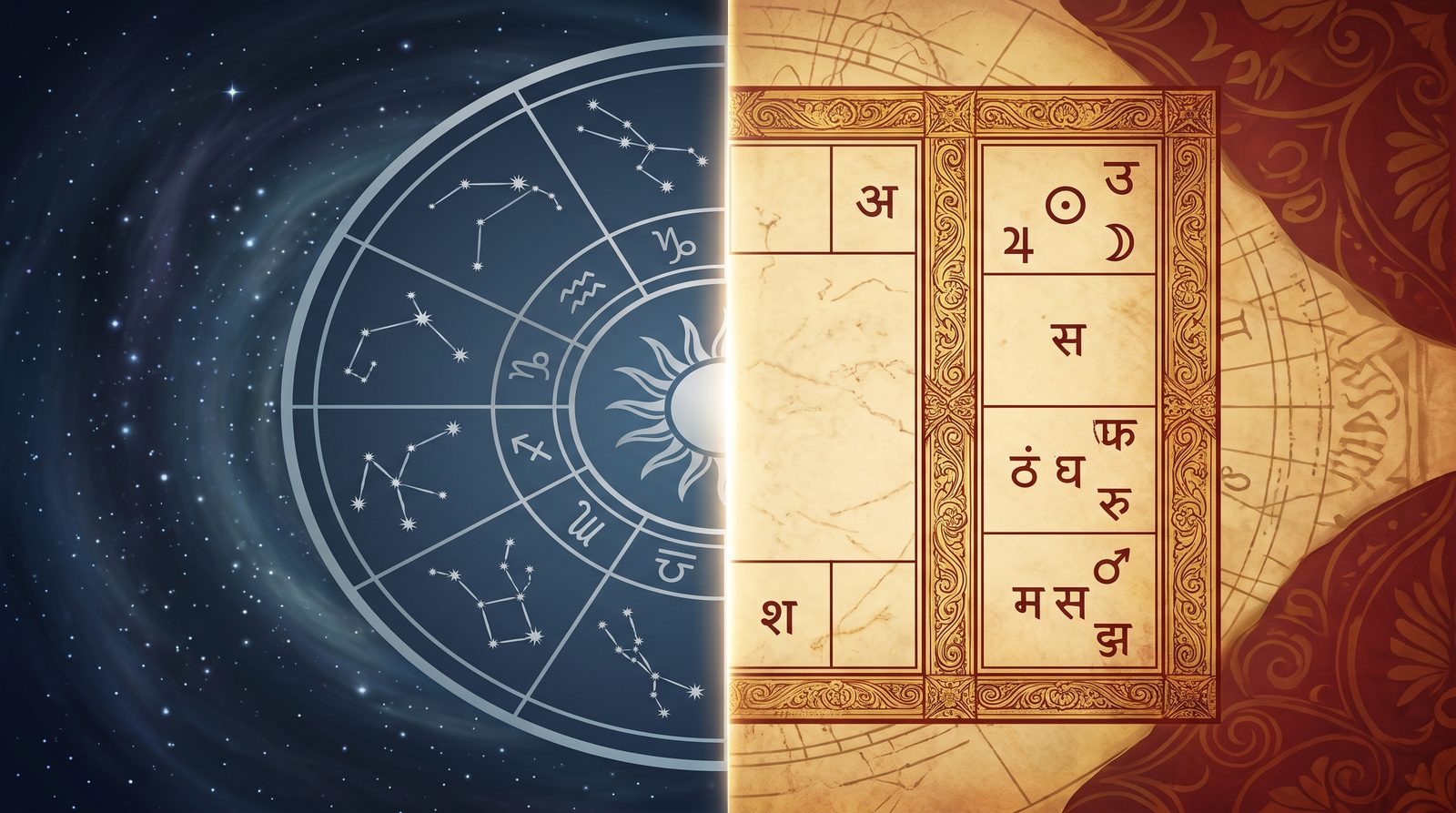
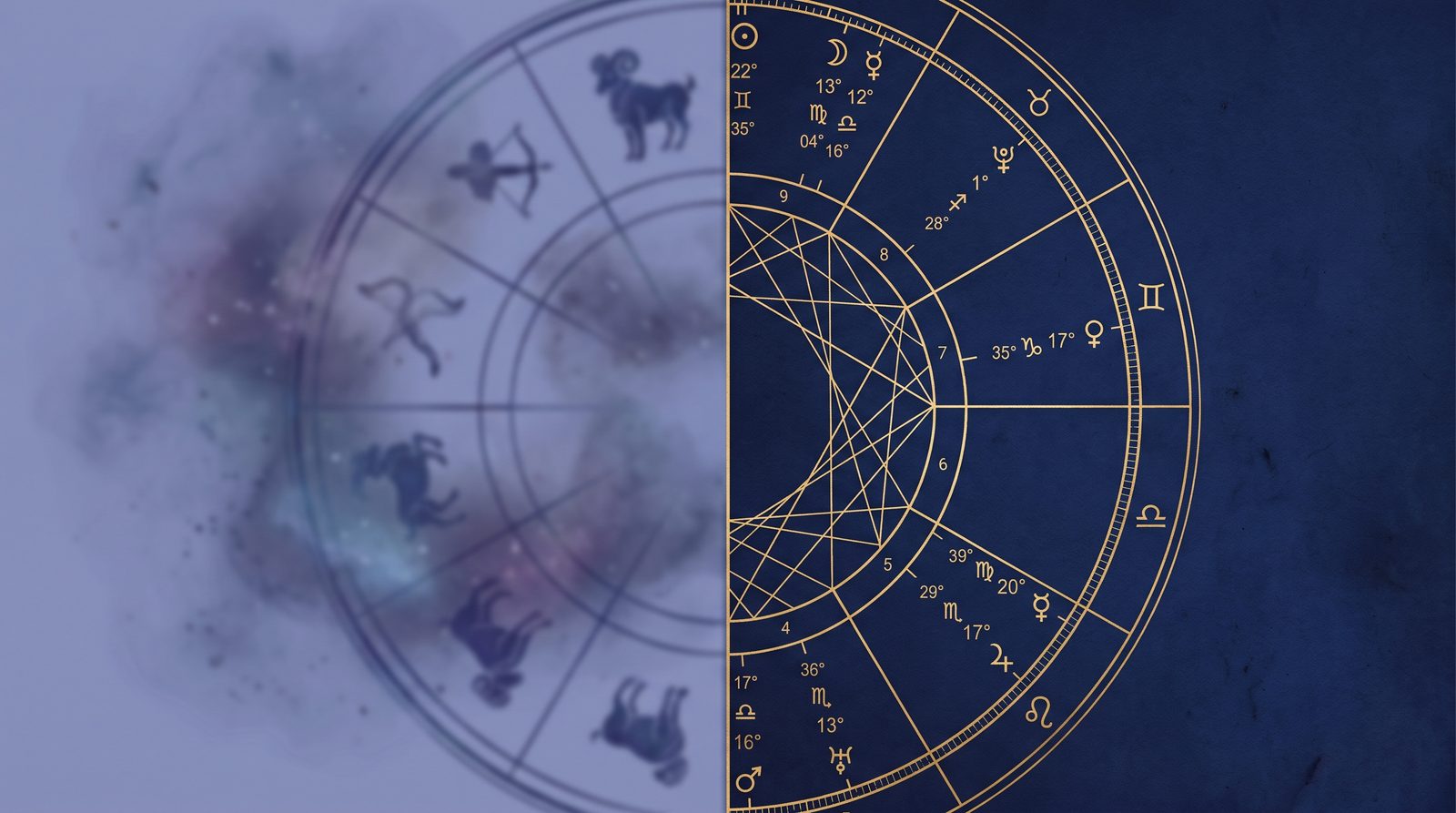
Half of this list (AstroSage, AstroTalk, Clickastro, Prokerala, Steer, Astromathi) uses the sidereal Vedic zodiac; the other half (Co-Star, The Pattern, CHANI) uses the tropical Western zodiac, with AskSoma blending elements of both. These aren't just stylistic differences — they're genuinely different astronomical reference systems, roughly 24° apart at this point, which is why your "sign" can differ entirely between a Vedic and Western tool using the exact same birth data. Neither is more "correct"; they're answering different questions. But comparing a Vedic app's kundli against a Western app's natal chart as if they should agree is a category error, not a bug in either product.
How to Actually Choose
The real dividing line in this category isn't Vedic vs. Western — it's generic-template versus chart-specific analysis.
Work backward from what you actually want answered, not from which app has the flashiest marketing:
💬
"I want to understand my personality"
Co-Star or The Pattern (Western, descriptive, well-written) suit this well — you don't need Vedic precision for self-reflection content.
📅
"I want to know when something specific will happen"
This is where Vedic Dasha-based systems have a real structural advantage — Astromathi (KP-specific, traceable) or Steer (conversational Vedic) are built for exactly this question in a way Western descriptive apps generally aren't.
🗣️
"I want to talk to an actual person"
AstroTalk or AstroSage's consultation layer — no AI substitutes for this if a human conversation is specifically what you want.
📖
"I want beautifully written daily guidance, not analysis"
CHANI, with the honest caveat that it's human-written, not AI — which for many people is a feature, not a limitation.
🆓
"I don't want to pay anything, ever"
Steer, Prokerala, or Astromathi's free tier — all three give you a genuinely complete core experience at no cost, not just a teaser.
A closing honesty note: we built Astromathi because we believe KP/Nadi's traceable, dated prediction methodology is underserved by the AI astrology market — that's a genuine belief, not just marketing copy. But if what you actually want is Western psychological content, a live human conversation, or a huge free calculator library, one of the other nine tools on this list is honestly the better fit for you, and we'd rather tell you that than pretend otherwise.
A Word on Methodology Transparency, Since This Article Needed It Too
It would be inconsistent to spend this much of the article critiquing vague methodology and self-interested rankings, and then not hold this specific piece to the same standard. So, plainly: this article was researched using each company's own public pages (pricing pages, app store listings, privacy policies) and independent third-party reviews and testing pieces, cited inline where a specific figure or claim came from a named source. Pricing figures reflect what was publicly listed at the time of research and can change — always verify current pricing on the company's own page before purchasing. We are not a neutral third party where Astromathi is concerned, and we've tried to compensate for that by ranking ourselves honestly rather than at #1, and by naming our own real limitations (no live human option, no Western astrology, a shorter track record than the category's oldest players) with the same directness we've used for everyone else.
Frequently asked questions
Is any AI astrology app actually 100% accurate?
No — and any app claiming perfect accuracy should be treated with real skepticism. Chart calculation (planetary positions, houses) can be mathematically precise given accurate birth data. Interpretation and prediction are a different matter: they depend on the astrological methodology applied, the accuracy of your birth time, and in the case of dated predictions, an inherently probabilistic system being read by either an AI or a human. Precision in calculation and certainty in prediction are not the same thing.
Why do free apps sometimes feel more accurate than paid ones?
Because "accuracy" here usually means two different things: calculation accuracy (does it compute your real chart correctly — several free tools do this very well) versus interpretive depth (how thoroughly it explains what that chart means — which is genuinely more often gated behind payment). A free tool with solid calculation and a paid tool with deeper interpretation aren't necessarily in conflict; they're often just answering different parts of the same question.
Should I trust an AI astrologer's prediction about a specific date?
Treat any specific-date prediction — from an AI or a human astrologer — as a probability-weighted estimate, not a certainty, and be especially cautious of any tool that presents dated predictions with false confidence. Methodologies that show their reasoning (which houses, which planetary period, why this window specifically) are more accountable and more useful to evaluate than a bare date with no visible logic behind it.
Is Vedic astrology 'more accurate' than Western astrology?
This is a common but not quite well-posed question — the two systems use different zodiac reference points (sidereal vs. tropical) for different purposes, not competing claims about the same measurement. Vedic astrology, and KP specifically, is generally more oriented toward dated, falsifiable event prediction; Western astrology today (especially apps like The Pattern and CHANI) leans more toward psychological and descriptive self-understanding. Neither claim of "more accurate" holds up well outside the specific question each system is actually built to answer.
How much should I actually expect to spend on an AI astrology app?
Based on the ten tools reviewed here: $0 for a genuinely complete experience is realistic (Steer, Prokerala, Astromathi's core tier), $12–15/month is the going rate for premium Western-astrology content apps (CHANI, The Pattern, AskSoma), and live human consultation runs ₹15–50/minute (roughly $0.18–$0.60/minute) on marketplaces like AstroTalk. There's no reason to pay premium prices for something a genuinely free tool already does well — check the free tier first.
Can I use more than one of these apps together?
Yes, and it's often the most useful approach in practice — there's no rule against it, and the tools genuinely serve different purposes. A common, sensible combination is a Vedic prediction-focused tool (Astromathi or Steer) for dated life-event questions, alongside a Western content app (CHANI or The Pattern) for daily reflection and psychological framing. Cross-checking a specific claim across two independently-calculated tools is also a reasonable way to build confidence in a birth-time-sensitive detail like your Ascendant.
Does a higher price mean a more accurate chart?
No — price correlates with feature breadth, content volume, or access to live humans far more than with the underlying calculation accuracy. Several of the free tools on this list (Steer, Prokerala, Astromathi's core tier) compute chart data through the same class of astronomical engine (Swiss Ephemeris or equivalent) as the paid options. What you're generally paying for is more content, more conversation depth, or a human's time — not a more correct planetary position.
See What Chart-Specific KP Analysis Actually Looks Like
10 free AI chart questions every day — no credit card, no per-minute billing